Expertise as a Service: A New Operating Principle for the AI Era
Expertise as a Service is a new operating principle for the AI era: artificial intelligence is the infrastructure, domain expertise is the product.

Ask AI how this applies to you


There is a principle forming in how the most useful artificial intelligence products are being built.
It is not about which model is the most capable. It is not about which interface is the most polished. It is about something more fundamental: where the expertise comes from, and how it gets applied.
The principle is Expertise as a Service, often shortened to EaaS.
It holds that artificial intelligence is not the product. Artificial intelligence is the infrastructure. The product is the expertise structured on top of it.
A New Era Needs a New Operating Model
When electricity arrived as a general-purpose energy source, it unlocked something important.
Not because electricity itself built anything. But because it gave industry a new kind of underlying power that could be channeled through machines, at a scale humans could not reach alone.
The factories that changed the world were not built by electrical engineers alone. They were built by people who deeply understood cars, textiles, steel, logistics, and production. The electricity gave them leverage. The domain knowledge gave that leverage direction.
That relationship is playing out again now, with artificial intelligence as the energy source.
Artificial intelligence can process language, recognize patterns, generate structure, and retrieve connections at a scale that was not practically accessible before. That is genuine infrastructure. It changes what is possible.
But useful infrastructure still depends on someone who knows what to build with it.
That is the gap Expertise as a Service addresses.
What Expertise as a Service Means
Expertise as a Service is not a rebranding of artificial intelligence. It is a specific operating model.
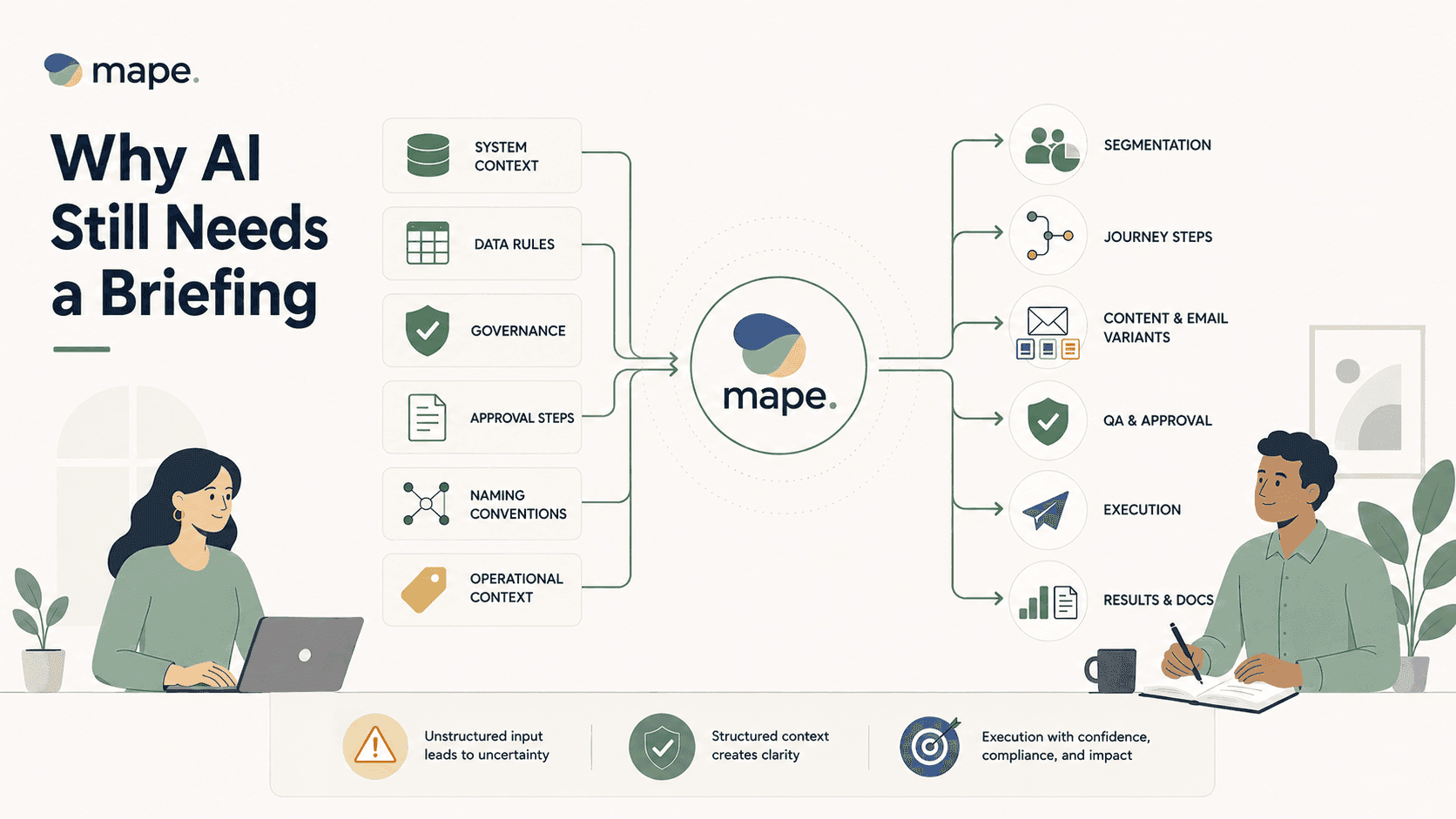
It means expert knowledge is structured into reusable layers that can apply judgment to real situations. Artificial intelligence provides the underlying intelligence infrastructure. Domain expertise determines what that intelligence does, how it reasons, what it checks, and what it returns.
Three things have to be true for this to work.
First, the system must understand the situation before it acts. Real experts inspect the environment before making a recommendation. An expertise layer has to do the same. Context comes before output.
Second, the knowledge has to be domain-grounded. Generic artificial intelligence produces generic output. Useful execution requires the patterns, constraints, and judgment that come from deep experience in a specific field.
Third, the human stays in control. Expertise as a Service augments professional work. It does not replace the accountability, final decision, creative direction, or governance responsibility that belongs to people.
Why Expertise Has Not Become Less Important
A reasonable assumption would be that as artificial intelligence becomes more capable, the need for domain expertise decreases.
The opposite is closer to the truth.
Expertise becomes more valuable when there is infrastructure capable of scaling it.
A skilled engineer working alone can do good work. A skilled engineer with access to industrial machines, a structured process, and a factory floor can do work at a completely different scale. The expertise did not become less important. It became the critical ingredient that determined what all that infrastructure actually produced.
The same pattern applies to artificial intelligence and domain knowledge.
Without structured expertise, powerful artificial intelligence tools produce capable but generic outputs. With structured expertise, those same tools can produce work that reflects years of professional judgment across thousands of real situations.
The leverage is real. But the leverage runs through expertise, not around it.
How mape Was Built From This Principle
mape exists because of one clear observation: the teams doing serious marketing work do not need another generic tool. They need expertise that is available where the work happens.
The people who built mape spent years in Customer Relationship Management, Marketing Automation, and Marketing Operations. They ran campaigns, built data models, designed automation logic, navigated approval processes, and worked through the operational friction that slows marketing teams down.
That knowledge was not turned into a prompt library. It was structured into an expertise layer that understands the environment it works in, applies judgment to real campaign situations, and produces outputs a team can review and trust.
mape adds a simple layer on top of existing Customer Relationship Management and marketing automation tools. Artificial intelligence provides the intelligence infrastructure. The domain expertise of the people who built mape shapes what that infrastructure does, what it checks, and what it returns.
That is Expertise as a Service in practice.
The Shift From Reaction to Judgment
There is an important difference between a tool that reacts to input and an expertise layer that applies judgment to a situation.
A tool does what it is told.
An expertise layer first asks: what kind of situation is this? What constraints apply? What kind of work is appropriate here? What would an experienced practitioner do, and why?
That judgment layer is what makes output trustworthy rather than merely fluent.
For Marketing Operations, this matters in the work that is both high-stakes and highly contextual: segmentation, campaign setup, journey logic, email creation, documentation, governance, and quality assurance. These are not tasks where generic output is good enough. They are tasks where domain judgment changes the result.
Why This Principle Matters Now
The timing is not accidental.
Artificial intelligence capability has reached a threshold where structuring domain expertise into reusable layers is genuinely feasible. The infrastructure is real. The tools to build on it are available.
At the same time, the demand is clear. Teams are under pressure to launch more campaigns, with tighter resources, across more markets and platforms. The complexity has not decreased. The margin for slow, brittle operating models has.
Expertise as a Service offers a structural response.
Not more prompts. Not a better chat interface. A different operating model: expert knowledge structured into layers that can be applied, scaled, and trusted.
The Principle Behind the Product
mape was built from this principle, and it shapes everything about how the product is designed.
Artificial intelligence is the energy. The factory is built by people who understand Marketing Operations.
That means the output reflects real domain knowledge, not surface pattern matching. It means the system understands the environment it is working in, not just the text it is given. It means humans stay responsible for strategy, governance, and final decisions.
And it means that as the artificial intelligence infrastructure continues to improve, the expertise layer on top of it compounds rather than resets.
Less time in setup. More campaigns live.