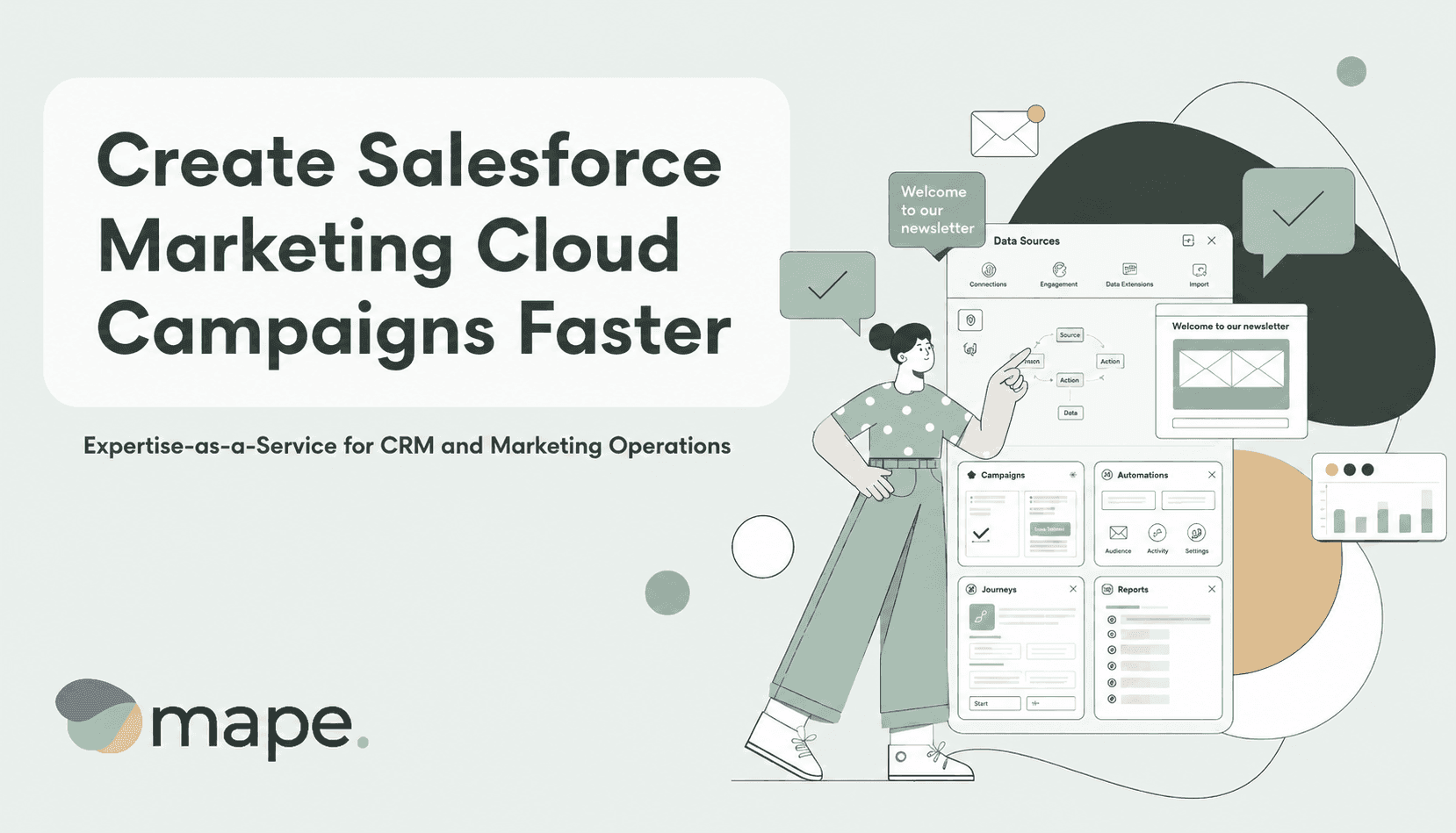
Documentation Should Be a Byproduct of Execution
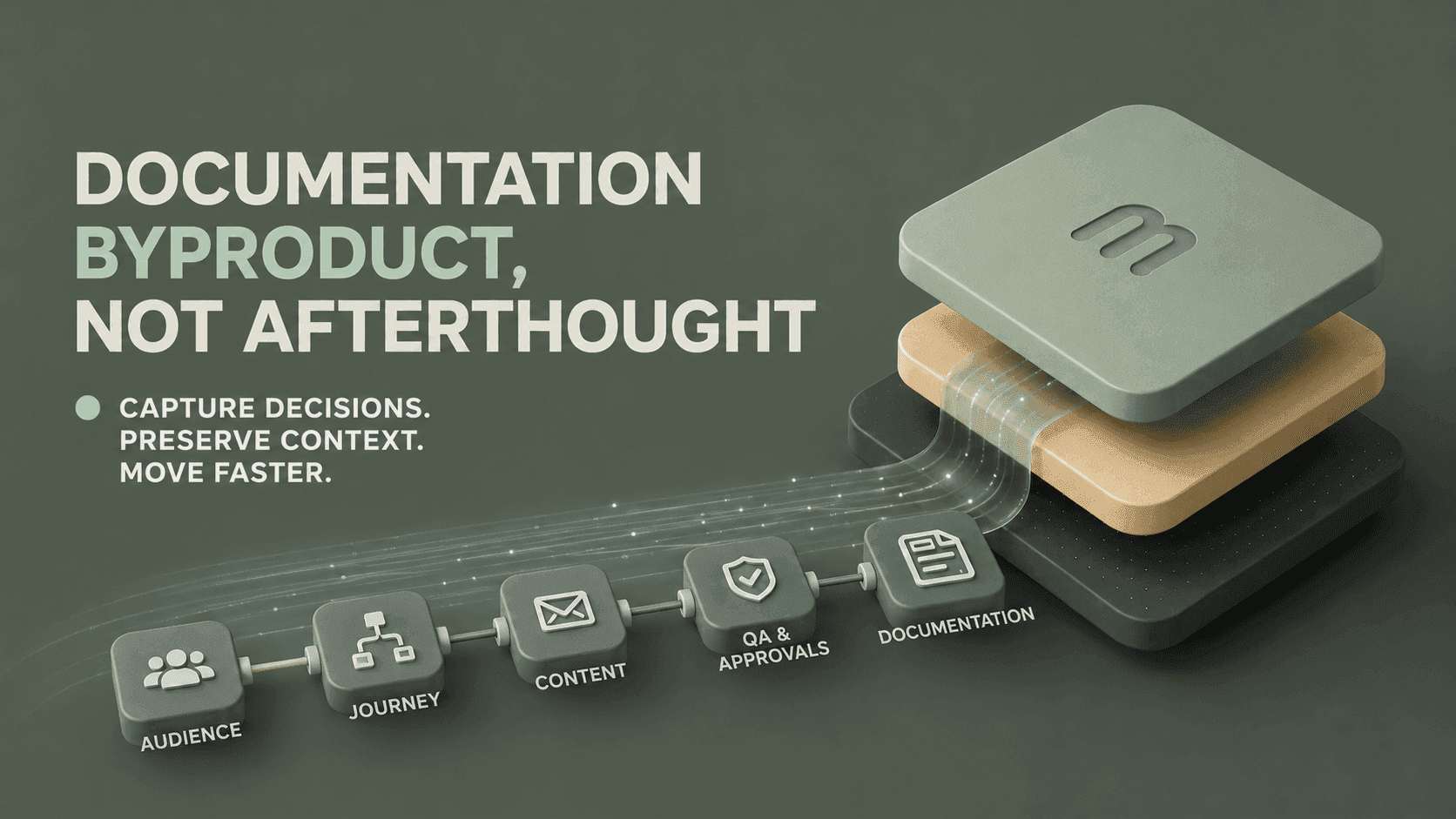
Documentation should not wait until after launch. The strongest teams capture decisions, audience logic, and quality checks while the work happens.
Ask AI how this applies to you


Campaign Documentation Should Be a Byproduct of Execution
Every Marketing Operations team knows the pattern. A campaign goes live, attention moves to the next deadline, and documentation becomes a task for later.
Later is where context disappears.
The audience logic is still somewhere. The approval decision is still in a message. The reason for a suppression rule may still be in someone's memory. But the next person who needs to understand the campaign has to reconstruct the work from fragments.
That is why campaign documentation should not be treated as a separate project after launch. It should be a byproduct of execution.
Why documentation falls behind
Documentation usually falls behind for practical reasons. Teams are not careless. They are busy with segmentation, campaign setup, email content, journey logic, testing, approvals, and reporting.
The launch date is visible. Documentation debt is quiet.
The cost appears later when a journey rule needs to change, a local market asks why an audience was excluded, or a new team member has to update a campaign without knowing why it was built that way.
Useful documentation captures decisions
Good campaign documentation is more than a list of assets. It explains what was built and why it was built that way.
For a campaign team, the useful record includes the goal, audience logic, exclusions, source data, journey or automation steps, market and language variants, quality checks, approvals, and decisions to remember next time.
The decision context matters most. A future team can see a segment in the platform, but it also needs to know why that segment was chosen.
Documentation belongs inside the workflow
The best time to document a decision is when the decision is made. That does not require more meetings or a heavy reporting template. It means the campaign workflow should capture the important context as the work moves forward.
When the audience is defined, the audience logic should be captured. When the journey is structured, the purpose of each step should be clear. When quality assurance finds an issue, the fix should become part of the record.
This turns documentation into operational memory.
How mape supports this model
mape is an expertise layer for Customer Relationship Management (CRM) and Marketing Operations. It supports the practical steps that slow campaigns down: segmentation, campaign setup, email creation, journey logic, reporting, and documentation.
Because mape is designed to work close to the customer setup, documentation can be connected to execution instead of written from memory after launch.
Human judgment still stays with the team. Approval, governance, and accountability remain visible. The goal is to remove avoidable context loss, not remove people from the process.
Start with one repeated campaign type
Teams do not need to document everything at once. Start with one repeated campaign type: newsletters, product launches, event follow-ups, onboarding journeys, or reactivation campaigns.
Define the documentation that should exist every time: goal, audience, data source, journey steps, content variants, checks, approvals, and decisions to reuse.
Once the standard exists, each campaign improves the next one.
Documentation is part of speed
Fast teams are not fast because they skip documentation. They are fast because they do not have to rediscover the same context every time.
For Marketing Operations, documentation quality is execution quality. It keeps campaign work understandable, repeatable, and safe to change.
Less time reconstructing context. More campaigns live.